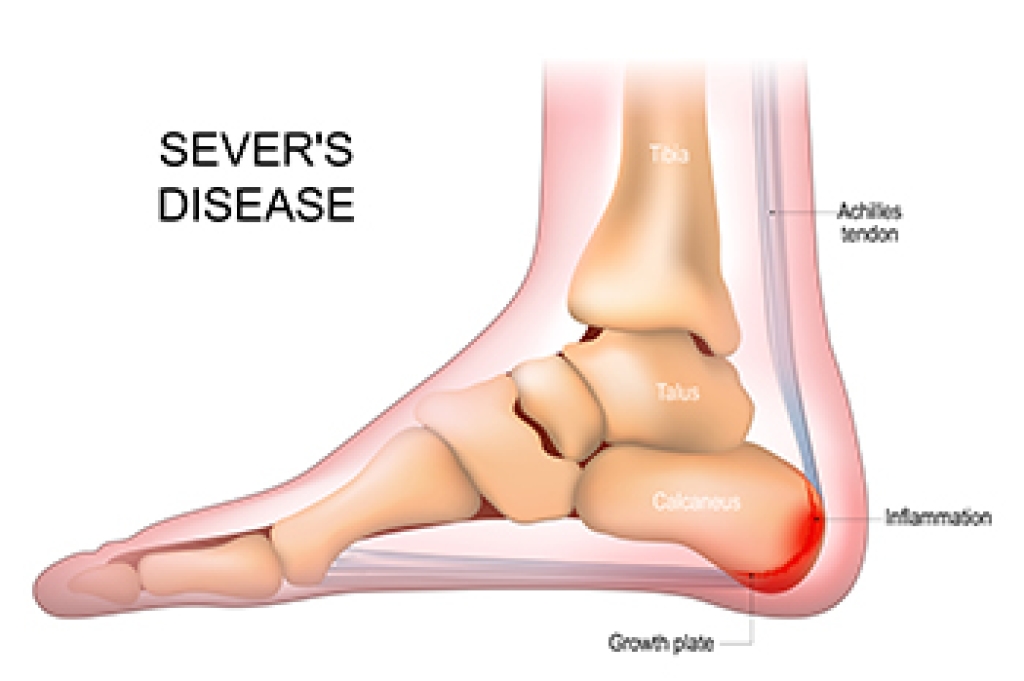
Sever’s disease is a common cause of heel pain in growing children and teens. It develops when the growth plate in the heel becomes swollen and irritated. A growth plate is an area of cartilage near the end of a bone where much of its growth occurs. Because this area is weaker than mature bone, it can be more vulnerable to injury. Sever’s disease typically occurs during the growth spurt of puberty, often between ages nine and 14. Heel pain or tenderness may affect one or both feet. Swelling, redness, and stiffness can also occur, and some children may limp because of discomfort.
During a growth spurt, bones and surrounding soft tissues may grow at different rates. Muscles and tendons can become tight and pull on the heel’s growth plate. Running and jumping can place additional stress on this area, leading to irritation and pain. For this reason, Sever’s disease is often seen in active children who participate in sports, especially activities performed on hard surfaces. Symptoms generally become worse during or after physical activity. Less commonly, prolonged standing can place constant pressure on the heel and contribute to the condition.
A podiatrist can evaluate a child’s heel pain and determine whether Sever’s disease may be responsible. Diagnosis usually involves discussing the child’s activities and carefully examining the heel. X-rays do not show Sever’s disease itself, but they may sometimes be used to rule out other causes of heel pain. Podiatric treatment may include supportive shoe inserts or a walking boot, when appropriate. More severe or persistent symptoms may require additional treatment. Fortunately, Sever’s disease usually improves without causing lasting problems, and it no longer occurs once the heel’s growth plate finishes developing. If your child has persistent heel pain that affects walking or sports participation, it is suggested that you consult a podiatrist for an evaluation and appropriate treatment options.
Sever's disease often occurs in children and teens. If your child is experiencing foot or ankle pain, see one of our podiatrists from Foot and Ankle Clinics, PA. Our doctors can treat your child’s foot and ankle needs.
Sever’s Disease
Sever’s disease is also known as calcaneal apophysitis, which is a medical condition that causes heel pain I none or both feet. The disease is known to affect children between the ages of 8 and 14.
Sever’s disease occurs when part of the child’s heel known as the growth plate (calcaneal epiphysis) is attached to the Achilles tendon. This area can suffer injury when the muscles and tendons of the growing foot do not keep pace with bone growth. Therefore, the constant pain which one experiences at the back of the heel will make the child unable to put any weight on the heel. The child is then forced to walk on their toes.
Symptoms
Acute pain – Pain associated with Sever’s disease is usually felt in the heel when the child engages in physical activity such as walking, jumping and or running.
Highly active – Children who are very active are among the most susceptible in experiencing Sever’s disease, because of the stress and tension placed on their feet.
If you have any questions, please feel free to contact our offices located in Woodbury, West St. Paul, and Edina, MN . We offer the newest diagnostic and treatment technologies for all your foot care needs.


