
Have you noticed a bony protrusion on the side of your big toe? If so, you may have developed the foot condition known as a bunion. Don't let bunions interfere with your daily activities.
Have you noticed a bony protrusion on the side of your big toe? If so, you may have developed the foot condition known as a bunion. Don't let bunions interfere with your daily activities.

Swollen feet are a common concern during pregnancy, caused by increased blood volume, fluid retention, and pressure from the growing uterus. While mild swelling is normal, sudden or severe swelling can be a sign of preeclampsia, a serious condition involving high blood pressure and potential organ complications. Symptoms of preeclampsia include rapid swelling in the feet, hands, or face, as well as headaches and vision changes. A podiatrist can help relieve pregnancy-related foot swelling by recommending supportive footwear, gentle exercises, compression socks, and safe foot elevation techniques. They can also identify symptoms that require medical attention. If you notice your feet and ankles are swollen during your pregnancy, it is suggested that you consult a podiatrist who can identify the cause and offer effective relief and management tips.
Pregnant women with swollen feet can be treated with a variety of different methods that are readily available. For more information about other cures for swollen feet during pregnancy, consult with one of our podiatrists from Foot and Ankle Clinics, PA. Our doctors will attend to all of your foot and ankle needs.
What Foot Problems Can Arise During Pregnancy?
One problem that can occur is overpronation, which occurs when the arch of the foot flattens and tends to roll inward. This can cause pain and discomfort in your heels while you’re walking or even just standing up, trying to support your baby.
Another problem is edema, or swelling in the extremities. This often affects the feet during pregnancy but tends to occur in the later stages.
How Can I Keep My Feet Healthy During Pregnancy?
If you have any questions, please feel free to contact our offices located in Woodbury, West St. Paul, and Edina, MN . We offer the newest diagnostic and treatment technologies for all your foot care needs.
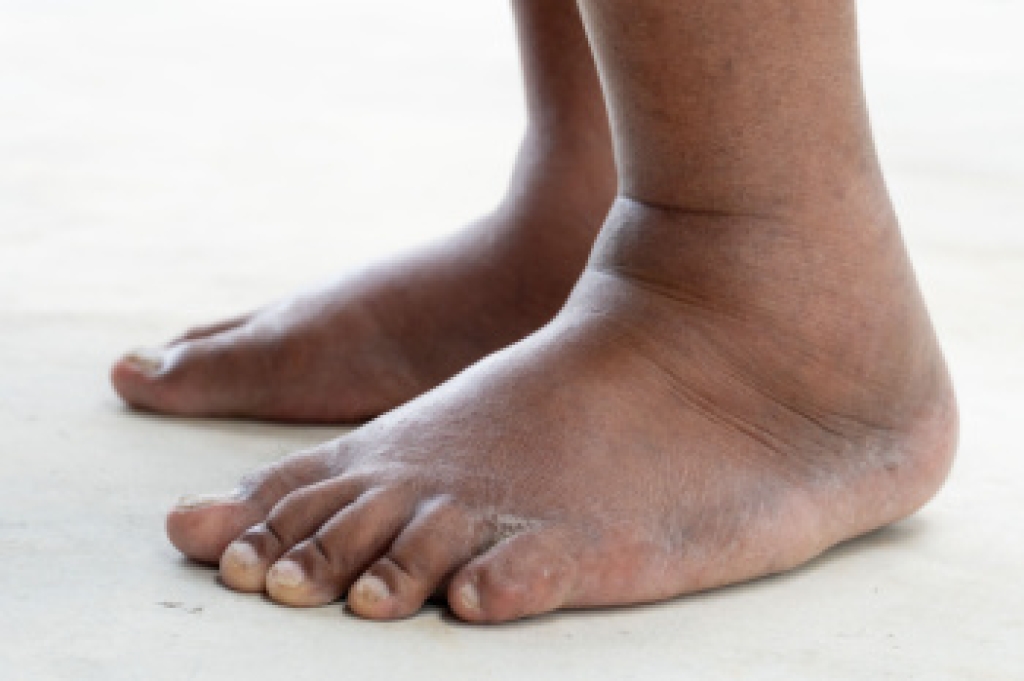
Swollen feet occur when excess fluid builds up in the tissues of the lower extremities. This condition, termed edema, can result from standing or sitting for long periods but may also indicate underlying health concerns such as heart disease, kidney disease, liver disease, or chronic venous insufficiency. Swelling may cause discomfort, heaviness, or visible puffiness in the feet and ankles. A podiatrist can help determine the cause through a thorough evaluation and recommend treatment, such as compression therapy and circulation improvement. If your feet are consistently swollen, it is suggested that you consult a podiatrist who can provide an accurate diagnosis and offer effective relief tips.
Swollen feet can be a sign of an underlying condition. If you have any concerns, contact one of our podiatrists of Foot and Ankle Clinics, PA. Our doctors can provide the care you need to keep you pain-free and on your feet.
Swollen feet are a common ailment among pregnant women and people who stand or sit for extended periods. Aging may increase the possibility of swollen feet and patients who are obese often notice when their feet are swelling too. There may be medical reasons why swollen feet occur:
Swollen feet can also be caused by bone and tendon conditions, including fractures, arthritis, and tendinitis. Additionally, there may be skin and toenail conditions and an infection may cause the feet to swell. Patients who take medicine to treat high blood pressure may be prone to getting swollen feet.
Many patients elevate their feet to help relieve the swelling and this is generally a temporary remedy. When a podiatrist is consulted the reason behind the swelling can be uncovered and subsequently treated.
If you have any questions please contact our offices located in Woodbury, West St. Paul, and Edina, MN . We offer the newest diagnostic and treatment technologies for all your foot and ankle needs.

Ankle sprains are common in volleyball due to the quick and forceful movements involved in the sport. Actions such as spiking and blocking place significant stress on the ankle as players jump and land, sometimes on uneven surfaces or another player’s foot. Risk factors include reduced muscle strength, limited active range of motion, and poor balance or footwear that lacks support. Additionally, symptoms often include pain, swelling, bruising, and difficulty bearing weight. A podiatrist can help by diagnosing the severity of the sprain, providing bracing or orthotics, and recommending prevention strategies. If you have sustained an ankle sprain while playing volleyball, it is suggested that you promptly consult a podiatrist who can provide expert foot and ankle care.
Sports related foot and ankle injuries require proper treatment before players can go back to their regular routines. For more information, contact one of our podiatrists of Foot and Ankle Clinics, PA. Our doctors can provide the care you need to keep you pain-free and on your feet.
Sports Related Foot and Ankle Injuries
Foot and ankle injuries are a common occurrence when it comes to athletes of any sport. While many athletes dismiss the initial aches and pains, the truth is that ignoring potential foot and ankle injuries can lead to serious problems. As athletes continue to place pressure and strain the area further, a mild injury can turn into something as serious as a rupture and may lead to a permanent disability. There are many factors that contribute to sports related foot and ankle injuries, which include failure to warm up properly, not providing support or wearing bad footwear. Common injuries and conditions athletes face, including:
Sports related injuries are commonly treated using the RICE method. This includes rest, applying ice to the injured area, compression and elevating the ankle. More serious sprains and injuries may require surgery, which could include arthroscopic and reconstructive surgery. Rehabilitation and therapy may also be required in order to get any recovering athlete to become fully functional again. Any unusual aches and pains an athlete sustains must be evaluated by a licensed, reputable medical professional.
If you have any questions please contact our offices located in Woodbury, West St. Paul, and Edina, MN . We offer the newest diagnostic and treatment technologies for all your foot and ankle needs.

Sever’s disease is a common cause of heel pain in growing children and adolescents, especially those who are active in sports. It occurs when the growth plate in the heel becomes inflamed due to repetitive stress and pressure. Risk factors include rapid growth spurts, participation in high impact activities, wearing poor footwear, and tight calf muscles. Symptoms often include heel pain that worsens with activity, swelling, tenderness, and limping. Causes are typically linked to overuse and strain on the developing heel bone. A podiatrist can help in diagnosing the condition, recommending rest, stretching, orthotics, and supportive shoes to relieve discomfort. If your child has persistent heel pain, it is suggested that you promptly consult a podiatrist who can provide effective relief and management solutions.
Sever's disease often occurs in children and teens. If your child is experiencing foot or ankle pain, see one of our podiatrists from Foot and Ankle Clinics, PA. Our doctors can treat your child’s foot and ankle needs.
Sever’s Disease
Sever’s disease is also known as calcaneal apophysitis, which is a medical condition that causes heel pain I none or both feet. The disease is known to affect children between the ages of 8 and 14.
Sever’s disease occurs when part of the child’s heel known as the growth plate (calcaneal epiphysis) is attached to the Achilles tendon. This area can suffer injury when the muscles and tendons of the growing foot do not keep pace with bone growth. Therefore, the constant pain which one experiences at the back of the heel will make the child unable to put any weight on the heel. The child is then forced to walk on their toes.
Symptoms
Acute pain – Pain associated with Sever’s disease is usually felt in the heel when the child engages in physical activity such as walking, jumping and or running.
Highly active – Children who are very active are among the most susceptible in experiencing Sever’s disease, because of the stress and tension placed on their feet.
If you have any questions, please feel free to contact our offices located in Woodbury, West St. Paul, and Edina, MN . We offer the newest diagnostic and treatment technologies for all your foot care needs.
Connect With Us


